What Young Players Gain from Basketball Club Teams in San Diego
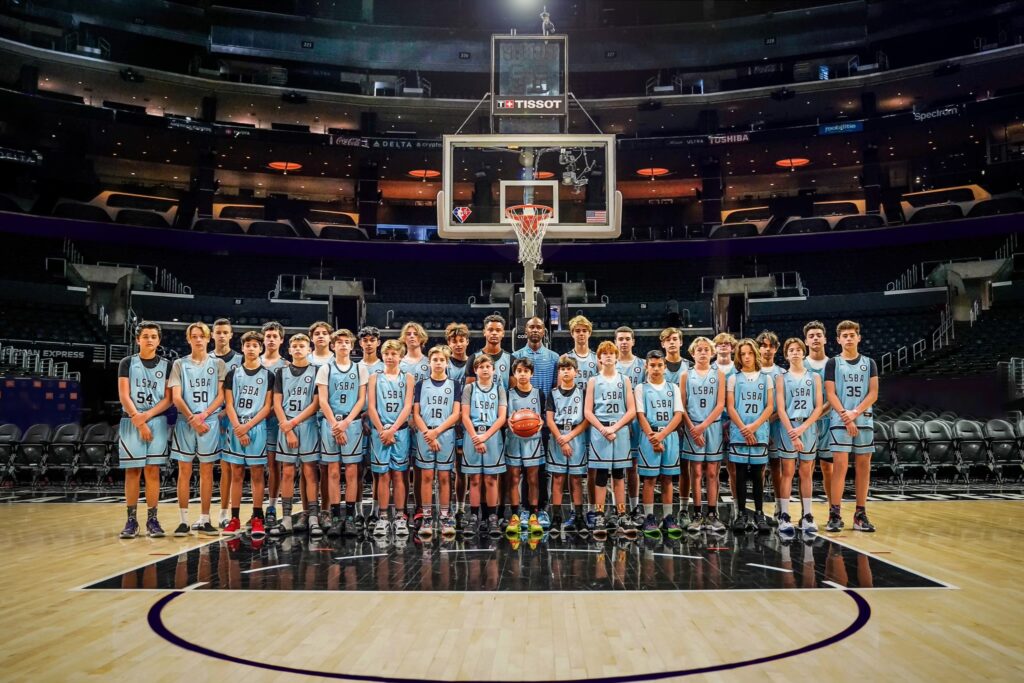
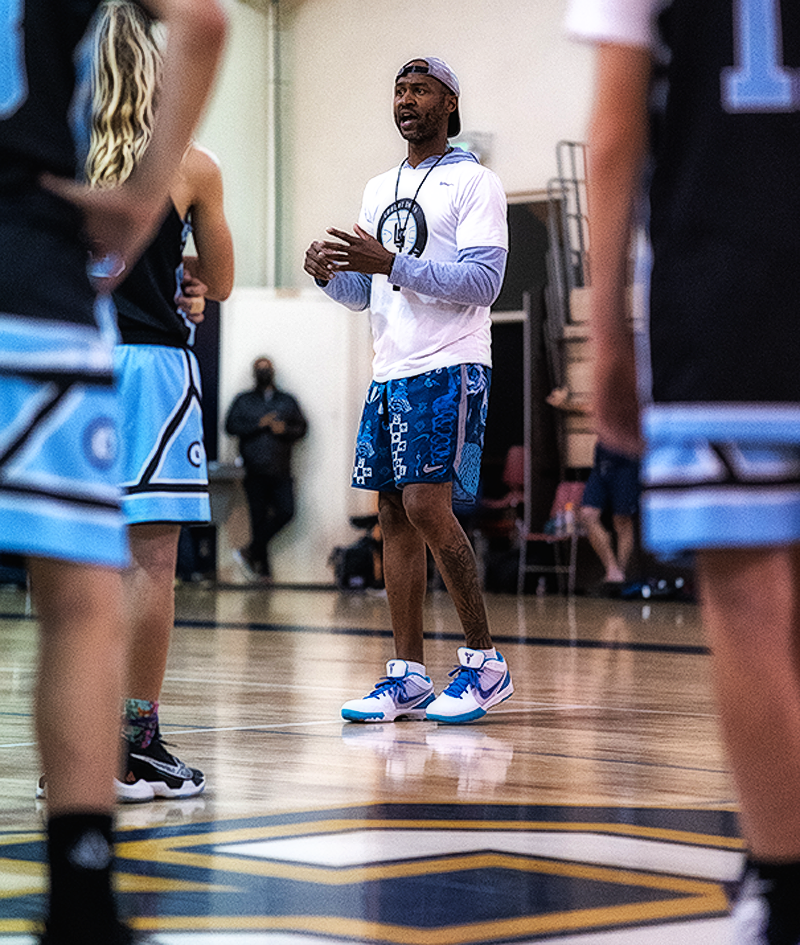
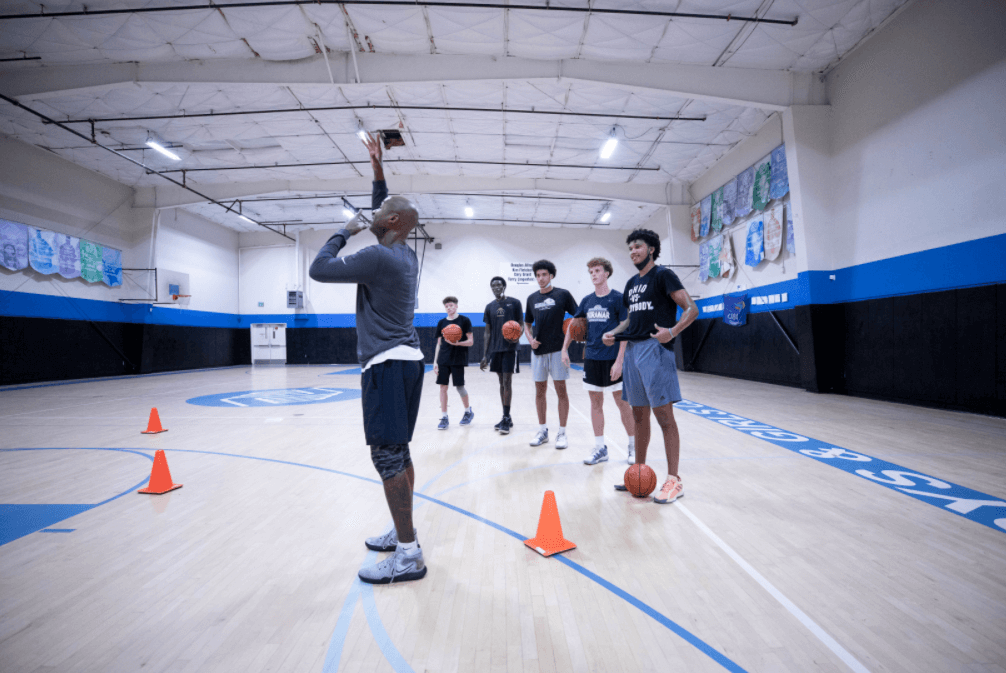
San Diego has never been a one-note basketball city. It is a place where beach culture, year-round good weather, dense pockets of serious youth sports, and a broad mix of school communities all shape how kids develop as athletes. That matters when families start looking beyond recreational leagues and ask whether club basketball is worth the time, cost, and commitment.
For many young players, joining one of the Basketball Club Teams San Diego offers is not simply about playing more games. It is about entering an environment where habits sharpen, competition changes, and expectations become more consistent. The gains are real, but they are not always the flashy ones parents notice first. The biggest improvements often show up in decision-making, resilience, communication, and the ability to handle the pace of higher-level play.
I have seen young athletes arrive at club tryouts with a decent jump shot and plenty of enthusiasm, only to realize within twenty minutes that skill alone does not carry a player very far. The court gets smaller when everyone moves quickly. Passing windows close faster. Help defense comes earlier. A player who looked dominant in a local rec league suddenly has to learn how to cut harder, defend without reaching, and stay engaged when they are not the primary scorer. That adjustment, while humbling, is often the beginning of real growth.
Better competition changes everything
The clearest difference between club basketball and most recreational settings is the level of competition. In a club environment, even younger age groups tend to feature players who have already spent years working on footwork, ball handling, and game awareness. A child who is used to coasting through possessions usually cannot do that for long.
This is one of the healthiest things that can happen to a developing player. Better competition forces honest self-assessment. It reveals weak spots quickly. Maybe a guard can dribble well in open space but struggles when trapped on the sideline. Maybe a forward scores easily near the basket in lower-level play but has trouble finishing against length and contact. These are not failures. They are useful data.
San Diego adds its own layer to this because the player pool is deep and spread across many communities. A young athlete may practice in one part of the county, then spend a weekend facing teams from North County, East County, South Bay, Orange County, or occasional travel tournaments with out-of-area programs. That variety matters. Different teams play different styles. Some press relentlessly. Some emphasize half-court execution. Some are long and athletic but raw. Others may be smaller and extremely disciplined. Learning to adapt across those matchups speeds up basketball maturity.
A player does not need to be the best athlete in the gym to benefit. In fact, many of the biggest gains come when a player is no longer the most naturally gifted one on the floor. Once raw athletic advantage fades, timing, spacing, anticipation, and composure start to matter more. Club basketball exposes players to that truth early.
Skill development becomes more intentional
A good club program does not just provide more basketball. It provides more purposeful basketball.
That distinction is important. Simply playing a high volume of games can reinforce bad habits if the coaching and practice structure are weak. The strongest club environments break skills into usable pieces and revisit them under pressure. They teach players how to transfer a drill into a possession, and a possession into a game situation.
Take shooting, for example. Many young players believe they are good shooters because they can make open shots during warmups. In club practice, that idea gets tested. Can they shoot after sprinting into a spot? Can they relocate after making a pass? Can they get the ball out cleanly against a closeout? Can they keep the same mechanics late in practice when their legs are tired? Those are the versions of shooting that matter in real games.
The same applies to ball handling. Fancy moves impress younger players, but club coaches usually want something more practical. Can the player change pace? Can they keep the ball alive without drifting into trouble? Can they beat the first defender without running directly into the second? Can they make the simple pass after gaining an advantage? Those are the details that separate useful handles from empty dribbling.
San Diego’s better club programs also tend to expose kids to specialized training, whether through skills sessions, position-specific work, or strength and movement development. Not every club offers that at the same level, and families should look closely at what is actually included. Still, for many players, club basketball is the first setting where they hear coaching that sounds more precise and less generic. Instead of “play harder,” they hear “open your hips on that closeout,” or “your first step is fine, but you’re picking up your dribble too early.” That kind of feedback helps players improve faster because it gives them something concrete to fix.
Players learn how to function in a team, not just on a team
A lot of youth athletes say they are team players. Far fewer know what that really looks like when minutes are uneven, roles shift, and personal numbers are not the main point.
Club basketball often teaches this lesson more directly than school ball at younger ages, mainly because rosters are assembled around competition. Players cannot assume they will have the ball all the time. They cannot expect a coach to design every possession around them. They have to figure out how to contribute within a structure.
That can be uncomfortable at first, especially for players who have always been the clear focal point on previous teams. Suddenly they may need to defend the toughest perimeter player, crash the boards, sprint back in transition, or become a reliable spacer in the corner while another teammate handles creation. For some kids, this feels like losing status. For others, it becomes a breakthrough. They begin to understand that winning basketball values screening, communication, timing, and discipline just as much as highlight plays.
I remember watching a middle school guard in a San Diego-area club tournament who had obvious talent but spent the first half trying to score off the dribble every trip. Nothing came easy. The help defense was loaded up, and his frustration kept rising. In the second half, whether from coaching, fatigue, or simple necessity, he started moving the ball earlier, cutting after passing, and talking on defense. His team played much better, and so did he. He finished with fewer flashy moments but had far more impact. That is the type of shift club basketball can create.
Confidence gets built on stronger foundations
Parents often say they want a program that “builds confidence,” and that is reasonable. But confidence in basketball is frequently misunderstood. Real confidence is not loud. It is not built from empty praise or easy wins. It comes from evidence.
When a player spends months guarding stronger opponents, learning new reads, surviving tough weekends, and seeing clear progress, confidence starts to take root in a durable way. They know they can handle pressure because they have handled it. They know they can recover from mistakes because they have had to. That kind of self-belief carries over beyond sports.
There is also a useful distinction between confidence and comfort. Recreational environments can keep players comfortable. Club environments, at their best, make players uncomfortable in ways that stretch them without breaking them. That is where growth lives. A young post player who never had to run the floor hard because she could simply camp near the basket will discover very quickly that club basketball demands more. Once she adapts and starts beating peers down the court, her confidence rises for a reason. She earned it.
Of course, the process has to be managed well. Not every child responds the same way to increased intensity. A strong coach can challenge players while still helping them feel seen and supported. A poor coaching environment can do the opposite, confusing harshness with standards. That is one of the major trade-offs families should weigh. Club basketball can be extremely rewarding, but only if the team culture is healthy.
The mental side develops faster than most people expect
Some of the most valuable gains from club basketball are hard to measure on a stat sheet.
Young players learn how to deal with travel fatigue, inconsistent officiating, short turnarounds between games, and occasional disappointment in playing time. They learn how to reset after a turnover instead of carrying it into the next possession. They learn that body language matters, especially when a game starts going sideways.
These lessons arrive early in tournament settings. A team may play well on Saturday morning, stumble in the afternoon, then have to regroup for bracket play. That rhythm is different from one-game-a-week formats. There is less time to dwell and more need to adapt. Kids who embrace that process often become tougher, steadier competitors.
Mental growth also shows up in preparation. Club players begin to understand the connection between sleep, hydration, nutrition, and performance. They feel the consequences when they stay up too late the night before an early game or eat poorly between contests. Coaches do not always need to lecture. The game itself teaches the lesson.
San Diego’s tournament scene, with drives across the county and sometimes beyond, gives players repeated opportunities to practice those routines. Packing gear the night before, arriving early enough to warm up properly, staying locked in after long breaks between games, those simple disciplines become habits. Over time, those habits separate serious players from casual ones.
Exposure to different coaching voices can be a major advantage
One underrated benefit of club basketball is that players hear the game explained in different ways. A school coach might emphasize one style. A trainer may stress mechanics. A club coach may prioritize reads, pace, or defensive accountability. When these messages align, development can accelerate. Even when they differ, players learn how to absorb instruction, filter feedback, and become active participants in their own growth.
That matters because basketball is not a one-answer sport. Two good coaches may teach transition offense differently. Two smart shooting instructors may focus on slightly different cues. Young players who only thrive under one communication style can struggle later. Club basketball, especially in a competitive market like San Diego, often broadens a player’s understanding of the game.
There is, however, a caveat. Too many voices can also create confusion, especially if a child is constantly bouncing between trainers, school coaches, and club expectations. The best outcomes usually come when adults keep the message clear. A player does not need a dozen technical corrections at once. They need a few priorities they can actually apply.
Friendships and social growth are part of the package
Sports conversations often center on scholarships, rankings, and advancement, but that misses something important. Club teams can become a meaningful social anchor during years when kids are figuring out identity, confidence, and belonging.
A well-run team creates a shared routine. Players travel together, warm up together, lose together, improve together. They spend enough time around one another to move beyond surface-level friendship. For many kids, especially those attending large schools or shifting social circles, this kind of bond matters more than adults realize.
In San Diego, where distances between neighborhoods can make it hard for school friends to connect outside class, club teams sometimes create communities that cut across those lines. A player from Chula Vista might build a close friendship with a teammate from Carlsbad simply because they spent two seasons grinding through practices and tournament weekends together. Those relationships can be lasting.
Still, families should be realistic. Not every roster turns into a tight-knit group. Team chemistry depends heavily on coaching, parent behavior, and how roles are managed. A talented roster with poor culture can become exhausting very quickly. A slightly less talented team with good chemistry can give players a far better overall experience.
Families also gain clarity, even when the answer is no
One honest truth about Basketball Club Teams San Diego families should hear is this: club basketball is not automatically the right path for every child, at least not at every age.
Sometimes the biggest gain is clarity. A player joins a club, experiences the pace and commitment, and realizes they love it. Great. Another player tries it and decides they would rather focus on school, another sport, or a less intense basketball setting. That is useful information too. Better to learn that at age 12 or 13 than to spend years forcing a fit that is not there.
Parents often worry that opting out of club basketball closes doors forever. In some cases, serious players who wait too long may have catching up to do, especially if they aim for highly competitive high school roles. But youth development is rarely linear. Plenty of players progress later, particularly if they stay active, train consistently, and find strong coaching elsewhere. Club basketball is a powerful path, not the only path.
What matters is whether the environment matches the child’s current needs. Some young athletes need advanced competition immediately. Others need a year of strength building, confidence work, or simple enjoyment before stepping into a higher-pressure setting.
The trade-offs are real, and families should weigh them carefully
Club basketball asks a lot. Time, money, weekend travel, scheduling coordination, and emotional energy all increase once a player joins a serious team. Those costs do not mean the experience lacks value, but they should not be brushed aside.
Fees vary widely, and so does what those fees cover. Some programs include practice space, coaching, uniforms, tournament entry, and a fairly robust developmental structure. Others charge significant amounts while offering little more than a jersey and games. Families need to ask direct questions and listen closely to the answers.
A few areas deserve special attention when evaluating a club team:
- How often does the team practice, and what does a typical practice actually look like?
- Who is doing the coaching, and how stable is that staff from season to season?
- What level of tournaments does the team enter, and are those events appropriate for the roster?
- How are playing time and player roles communicated to families?
- What support exists for development outside weekend games?
Those questions reveal far more than branding or social media clips ever will.
There is also the issue of burnout. Year-round basketball can wear down even talented, motivated kids. Shoulders, knees, and lower backs need rest. So do minds. The best programs understand that more is not always better. They push for quality, not endless volume. Families who treat every season like an emergency often discover too late that the child has stopped enjoying the sport.
What improvement tends to look like over a full season
Parents sometimes expect dramatic overnight transformation once a child joins a club team. That is rarely how it works. Progress usually comes in layers.
At first, players are simply adjusting. They are learning terminology, pace, and expectations. Mistakes can increase before they decrease. Then the game begins to slow down. A player who once dribbled into crowds starts making the easy pass. A wing who used to lose focus on weak-side defense begins tagging cutters and rotating on time. A big who relied only on size starts sealing earlier and finishing through contact.
By the midpoint of a season, improvement often appears in subtle ways that coaches notice immediately, even if casual spectators do not. Better stance. Better balance. Better spacing. Fewer wasted dribbles. More purposeful communication. These are the details that eventually lead to visible results.
Later comes transfer. The player starts bringing club habits into school ball, pickup runs, and individual workouts. That is when the developmental value becomes obvious. They are not just better in one setting. They have become a more complete basketball player.
One reason this process works well in San Diego is volume of opportunity. There are enough clubs, leagues, and tournament weekends that players can get repeated competitive reps without always traveling across the country. That local density can be a real advantage when it is paired with thoughtful coaching https://judahqznj926.raidersfanteamshop.com/basketball-club-teams-san-diego-and-the-power-of-consistent-training and smart scheduling.
The strongest gain is often independence
Perhaps the most important thing club basketball gives young players is ownership.
They begin to see that coaches can guide, parents can support, and trainers can teach, but eventually the work belongs to them. Improvement depends on whether they show up ready, respond to correction, compete in practice, and keep going when progress feels slow.
That shift toward ownership is powerful. It changes how a player carries themselves. They ask better questions. They prepare more seriously. They stop blaming referees, teammates, or bad luck for every rough outing. They become accountable.
And that quality has a way of spilling into the rest of life. A kid who learns how to recover from a poor shooting weekend and return to practice focused has learned something bigger than basketball. A player who balances school demands with training and travel has learned time management under pressure. A teammate who accepts a smaller role for the sake of winning has learned maturity that many adults still struggle with.
That is the real case for Basketball Club Teams San Diego families consider each year. Yes, players can gain stronger skills, tougher competition, and better exposure to the game. But beneath all of that, the best club experiences help young athletes grow into more disciplined, resilient, self-aware people. For the right child, in the right program, that return is substantial.
Lamont Smith Basketball Academy
888 Clairemont Mesa Blvd Suite T-2, San Diego, CA 92123
(619) 639-8778
FAQ About Basketball Club Teams San Diego
How can a player join an LSBA club team?
Players are evaluated during practices so the coaching staff can recommend an appropriate team and development level. Families should contact the academy to confirm current openings and evaluation details.
Are club teams available for newer basketball players?
Yes. LSBA describes multiple levels, including a developmental option for newer players as well as more competitive teams for athletes with prior club experience.
What do LSBA club team practices emphasize?
Practices emphasize basketball fundamentals, team defense, structure, communication, and player development. The specific focus may vary according to the team and experience level.
Do all LSBA teams travel?
Travel expectations vary by level. Some teams focus on local competition, while advanced teams may participate in tournaments elsewhere in Southern California or beyond. Families should confirm the current schedule before enrolling.